Understanding employment is crucial in today’s dynamic world. It’s more than just a paycheck; it’s a multifaceted relationship impacting individuals, businesses, and the economy as a whole. From full-time positions to the burgeoning gig economy, the landscape of work is constantly evolving, presenting both opportunities and challenges. This guide explores the various facets of employment, offering insights into its definition, types, processes, legal aspects, and its significant role in societal well-being.
We will delve into the legal rights and responsibilities of both employees and employers, examining how technological advancements and economic shifts are reshaping the modern workplace. By understanding the complexities of employment, individuals can navigate their careers more effectively, and businesses can foster a more productive and equitable environment.
Types of Jobs and Industries
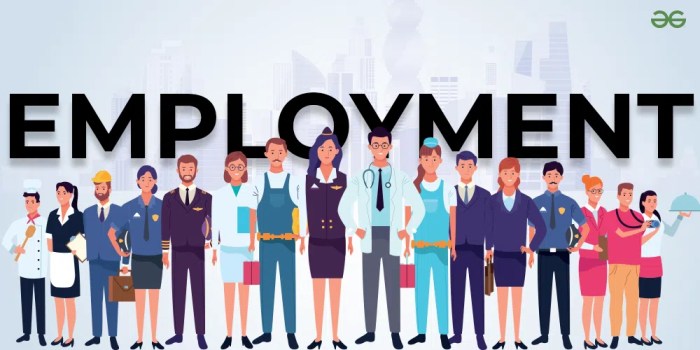
The world of work is incredibly diverse, encompassing a vast array of jobs and industries, each with its own unique requirements and characteristics. Understanding the different types of employment available is crucial for individuals navigating their career paths and for businesses seeking to understand the talent pool. This section will explore the categorization of jobs by skill level, provide examples across various sectors, and examine the transformative impact of technology on employment.
Jobs are often categorized based on the level of skill and experience required. Entry-level positions typically demand minimal prior experience and focus on foundational skills, offering opportunities for professional development. Skilled jobs require specialized training, certifications, or apprenticeships, demonstrating proficiency in specific trades or techniques. Professional roles demand advanced education, expertise, and significant experience, often involving strategic thinking and leadership responsibilities.
Job Sectors and Roles
The global economy is comprised of numerous sectors, each offering a wide range of job roles. For instance, the healthcare sector encompasses physicians, nurses, technicians, administrators, and researchers, all contributing to the delivery of healthcare services. The technology sector includes software developers, data scientists, cybersecurity analysts, and network engineers, driving innovation and technological advancements. The manufacturing sector employs production workers, engineers, quality control specialists, and supply chain managers, responsible for the production and distribution of goods.
The financial sector encompasses roles such as financial analysts, investment bankers, accountants, and auditors, managing and regulating financial resources. Finally, the education sector employs teachers, professors, administrators, and researchers, fostering learning and development.
Technological Advancements and Employment
Technological advancements have profoundly impacted employment across various industries. Automation, artificial intelligence, and machine learning are transforming manufacturing processes, leading to increased efficiency and productivity but also potentially displacing workers in certain roles. In healthcare, telehealth technologies are expanding access to care while creating new job roles in digital health management. The rise of e-commerce has reshaped the retail landscape, creating jobs in logistics and online customer service while impacting traditional brick-and-mortar retail employment.
The finance sector has embraced fintech innovations, leading to the creation of new roles in areas like blockchain technology and financial data analytics, while simultaneously changing the nature of traditional banking jobs.
Evolution of Employment in Manufacturing
The manufacturing industry has undergone a significant transformation over the past century.
The following bullet points illustrate this evolution:
- Early 1900s – Early 20th Century: Primarily characterized by manual labor, assembly lines, and mass production. Jobs were largely unskilled or semi-skilled, with a focus on repetitive tasks.
- Mid-20th Century: Introduction of automation and machinery led to increased productivity and a shift towards more skilled roles in operation and maintenance.
- Late 20th Century: The rise of computers and robotics further automated processes, requiring specialized skills in programming, engineering, and robotics maintenance. Just-in-time manufacturing systems emerged, emphasizing efficiency and supply chain management.
- 21st Century: Emphasis on advanced manufacturing techniques such as additive manufacturing (3D printing), Industry 4.0 technologies (smart factories, IoT), and data analytics for process optimization. Jobs now require advanced technical skills, data analysis capabilities, and problem-solving expertise.
Employment Rights and Responsibilities
Understanding the legal framework surrounding employment is crucial for both employers and employees. This section Artikels the key rights afforded to employees and the corresponding responsibilities they hold within the employment relationship. A balanced understanding of these aspects fosters a productive and legally compliant work environment.
Employee Legal Rights
Employees are protected by a range of laws designed to ensure fair treatment and safe working conditions. These rights vary by location and jurisdiction but generally include the right to a minimum wage, safe working conditions, protection from discrimination and harassment, and the right to take paid or unpaid leave (depending on local laws and tenure). Minimum wage laws establish a baseline hourly rate that employers must pay, preventing exploitation of workers.
Occupational Safety and Health Administration (OSHA) regulations, for example, in the United States, mandate safe working conditions, requiring employers to provide necessary safety equipment and training to minimize workplace hazards. Laws prohibiting discrimination ensure equal opportunities for all, regardless of race, religion, gender, age, or other protected characteristics. Similarly, laws regarding family and medical leave offer employees time off for personal or family health matters.
Employee Responsibilities
While employees enjoy significant legal protections, they also have responsibilities towards their employers. These responsibilities typically include maintaining a professional attitude, adhering to company policies and procedures, fulfilling job duties to the best of their ability, and respecting the property and confidentiality of the workplace. Maintaining a professional demeanor includes punctuality, appropriate communication, and respectful interactions with colleagues and supervisors.
Following company policies demonstrates a commitment to the organization’s rules and values. Diligent performance of assigned tasks is fundamental to workplace productivity and success. Respecting company property and maintaining confidentiality are essential for preserving the integrity and security of the business.
The Role of Labor Unions
Labor unions play a vital role in advocating for and protecting employee rights. They act as collective bargaining agents, negotiating with employers on behalf of their members to secure better wages, benefits, and working conditions. Unions also provide support and representation to employees facing unfair treatment or disciplinary actions. Through collective bargaining, unions can negotiate contracts that include provisions for improved safety measures, increased pay, and better benefits packages.
They can also provide legal assistance to employees who believe their rights have been violated. The strength of a union lies in its collective power, allowing workers to address concerns and negotiate for better terms that might be unattainable for individual employees.
Common Employee Rights and Employer Responsibilities
| Employee Right | Employer Responsibility | Employee Right | Employer Responsibility |
|---|---|---|---|
| Minimum Wage | Pay at least the legally mandated minimum wage. | Safe Working Conditions | Provide a safe and healthy work environment, including necessary safety equipment and training. |
| Protection from Discrimination | Provide equal opportunities and avoid discriminatory practices. | Reasonable Accommodation | Make reasonable accommodations for employees with disabilities. |
| Paid Time Off (as per law) | Provide legally mandated paid leave (e.g., sick leave, vacation time). | Fair Treatment | Treat employees fairly and consistently, applying rules and policies impartially. |
Employment and the Economy
Employment and economic growth are inextricably linked; a healthy economy typically boasts high employment rates, while economic downturns often lead to job losses and increased unemployment. This relationship is cyclical: strong employment fuels consumer spending, driving economic expansion, which in turn creates more jobs. Conversely, high unemployment reduces consumer spending, potentially leading to economic contraction and further job losses.
Understanding this dynamic is crucial for policymakers aiming to foster stable economic growth.The impact of unemployment extends far beyond individual financial hardship. High unemployment rates correlate with increased social problems, including poverty, crime, and decreased social mobility. Individuals facing unemployment often experience stress, anxiety, and depression, impacting their mental and physical health. The strain on families and communities can be significant, leading to increased demands on social welfare systems and reduced overall societal well-being.
Conversely, a robust employment market fosters economic stability and improves overall quality of life.
Factors Influencing Employment Rates
Government policies play a crucial role in shaping employment levels. Fiscal policies, such as government spending and taxation, can stimulate or dampen economic activity, directly affecting job creation. Monetary policies, controlled by central banks, influence interest rates and credit availability, impacting investment and hiring decisions. For example, expansionary fiscal policies during a recession can boost employment by increasing government spending on infrastructure projects, creating jobs in construction and related sectors.
Similarly, lower interest rates can encourage businesses to invest and expand, leading to increased hiring. Technological change, while often increasing productivity in the long run, can also cause short-term job displacement in certain sectors as automation replaces manual labor. For instance, the rise of robotics in manufacturing has led to job losses in some areas, while simultaneously creating new roles in areas such as robotics engineering and maintenance.
Education Levels and Employment Opportunities
A strong correlation exists between educational attainment and employment opportunities. Individuals with higher levels of education generally experience lower unemployment rates and earn higher wages. For instance, according to the U.S. Bureau of Labor Statistics, the unemployment rate for individuals with a bachelor’s degree or higher is consistently lower than for those with only a high school diploma.
Data from OECD countries similarly demonstrates a clear trend: higher educational attainment is strongly associated with higher employment rates and earnings. The disparity is significant; individuals with advanced degrees often command higher salaries and have access to a broader range of career paths, while those with limited education face greater challenges in securing stable and well-paying employment.
This highlights the importance of investing in education and training to improve individual prospects and boost overall economic productivity.
In conclusion, employment represents a complex interplay of individual needs, societal structures, and economic forces. While the traditional model continues to evolve, adapting to technological advancements and shifting economic landscapes, the fundamental importance of employment in providing financial security, social interaction, and personal fulfillment remains paramount. Understanding the various aspects of employment, from securing a job to navigating legal rights, is essential for both individuals and organizations to thrive in the modern world.
FAQ Compilation
What is the difference between a job and a career?
A job is typically a position held for income, while a career is a long-term progression in a chosen field, often involving professional development.
How do I negotiate salary effectively?
Research industry standards, know your worth, be confident, and be prepared to walk away if the offer is unacceptable. Focus on your skills and contributions.
What are some common interview mistakes to avoid?
Arriving late, being unprepared, speaking negatively about past employers, and failing to ask thoughtful questions are common pitfalls.
What is an independent contractor?
An independent contractor provides services to a client or company but is not considered an employee, typically having more autonomy and responsibility for taxes and benefits.