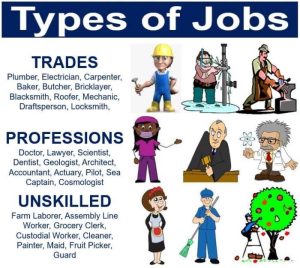
Navigating the world of work can be challenging, especially understanding the nuances of general employment. This exploration delves into the multifaceted landscape of general employment, examining its historical context, current trends, and future projections. We’ll unpack the essential skills, qualifications, and challenges associated with securing and thriving in general employment roles, offering insights for both job seekers and employers alike.
The discussion also considers the broader societal and economic impacts of general employment patterns.
From analyzing job market trends and the influence of technological advancements to exploring the crucial role of transferable skills and soft skills, this overview aims to provide a holistic understanding of general employment. We’ll also consider the ethical implications of employment practices and the impact of government policies on employment levels, painting a comprehensive picture of this vital sector.
Job Market Trends in General Employment

The global job market is a dynamic landscape, constantly shifting in response to technological advancements, economic fluctuations, and evolving societal needs. Understanding these trends is crucial for individuals seeking employment and for policymakers aiming to foster economic growth. This section will examine several key trends shaping general employment rates worldwide.
Current data reveals a complex picture. While overall employment rates fluctuate regionally and by sector, several overarching patterns emerge. The rise of the gig economy, for example, presents both opportunities and challenges, while automation continues to reshape traditional industries. Furthermore, demographic shifts, such as an aging workforce in many developed nations, influence the demand for specific skill sets and overall employment numbers.
Growth and Decline in Specific Employment Areas
The service sector continues to be a significant driver of job growth globally. Areas such as healthcare, education, and technology-related services consistently show robust employment increases. Conversely, sectors heavily reliant on manual labor, such as manufacturing in some developed economies, have experienced job losses due to automation and offshoring. For example, the manufacturing sector in the United States has seen a decline in employment over the past few decades, while the healthcare sector has experienced substantial growth, driven by an aging population and advancements in medical technology.
Precise figures vary by country and region, but this general trend holds true across many developed nations.
Technological Advancements and General Employment
Technological advancements have profoundly impacted general employment opportunities. While automation has led to job displacement in certain sectors, it has also created new roles in areas such as software development, data science, and artificial intelligence. The impact is not uniform; some jobs are entirely replaced, while others are augmented by technology, requiring workers to adapt and acquire new skills.
For instance, the rise of e-commerce has led to a significant increase in logistics and delivery jobs, while simultaneously reducing the need for traditional retail staff in some areas. This necessitates ongoing reskilling and upskilling initiatives to bridge the gap between displaced workers and emerging job opportunities.
Geographical Variations in General Employment Rates
General employment rates exhibit significant geographical variations. Developed nations often experience lower unemployment rates than developing nations, although this is not always the case. Regional disparities within countries also exist, with urban areas often boasting higher employment rates than rural areas due to concentrated economic activity. Factors such as infrastructure development, access to education and training, and government policies all contribute to these variations.
For example, regions with strong technological hubs tend to have lower unemployment and higher wages than regions with predominantly agricultural economies. This highlights the importance of targeted economic development strategies to address regional imbalances.
Future of General Employment
The future of general employment is a dynamic landscape shaped by technological advancements, evolving societal needs, and global economic shifts. Understanding these forces is crucial for individuals and organizations alike to navigate the coming decades successfully. This section will explore potential trends, the impact of automation, adaptation strategies, and emerging opportunities.
Potential Future Trends in General Employment
Several key trends are expected to significantly influence the general employment landscape. The gig economy, characterized by short-term contracts and freelance work, will likely continue its expansion, offering flexibility but also requiring adaptability and proactive self-management from workers. Remote work, accelerated by recent events, will remain a significant factor, demanding robust digital infrastructure and potentially altering traditional office dynamics.
Finally, a growing emphasis on skills-based hiring, rather than solely relying on traditional educational credentials, will necessitate continuous learning and upskilling throughout one’s career. This shift will require individuals to proactively manage their professional development and adapt to evolving job requirements.
Impact of Automation on Various General Employment Sectors
Automation, driven by artificial intelligence (AI) and machine learning (ML), is poised to reshape numerous sectors. Manufacturing, for instance, is already experiencing significant automation, with robots performing tasks previously done by humans. This has led to job displacement in some areas, but also created new roles in areas like robotics maintenance and AI programming. Similarly, the transportation sector is undergoing transformation with the rise of autonomous vehicles, potentially impacting the employment of truck drivers and taxi drivers, while creating opportunities in the development and maintenance of self-driving technology.
The customer service industry is also seeing increased automation through chatbots and AI-powered support systems, which may lead to a shift in the nature of customer service roles towards more complex problem-solving and human interaction.
Strategies for Adapting to Future Changes in the General Employment Landscape
Adapting to the changing employment landscape requires a proactive approach. Lifelong learning is paramount, with individuals needing to continuously acquire new skills and knowledge to remain competitive. Developing strong adaptability and problem-solving skills is also crucial, enabling workers to navigate unforeseen challenges and embrace change. Networking and building strong professional relationships can provide access to opportunities and support during transitions.
Furthermore, embracing technological advancements and developing digital literacy are essential for success in an increasingly automated world. For example, a manufacturing worker might pursue training in robotics maintenance, while a customer service representative might focus on developing advanced communication and conflict resolution skills to handle complex customer interactions that AI cannot yet manage.
Emerging Technologies Creating New Opportunities in General Employment
While automation presents challenges, it also creates new opportunities. The development and implementation of AI and ML technologies themselves require a skilled workforce, creating jobs in software engineering, data science, and AI ethics. The growth of renewable energy and sustainable technologies is also driving demand for skilled professionals in engineering, research, and development. The increasing importance of cybersecurity necessitates a growing workforce specializing in data protection and network security.
Finally, the expansion of the healthcare sector, coupled with technological advancements in medical technology and personalized medicine, will create numerous opportunities in healthcare professions and related fields. For instance, the development of personalized medicine requires professionals skilled in genomics and data analysis, creating entirely new job categories.
In conclusion, general employment represents a dynamic and ever-evolving sector, influenced by technological advancements, economic shifts, and evolving societal needs. Understanding the trends, challenges, and opportunities within this sector is crucial for individuals seeking employment and for policymakers striving to foster a robust and equitable economy. By adapting to change, embracing new skills, and navigating the complexities of the job market strategically, individuals can find success and contribute meaningfully to the general employment landscape.
The future of work requires adaptability, foresight, and a commitment to continuous learning and development.
Question Bank
What is the difference between general and specialized employment?
General employment encompasses a broad range of roles requiring transferable skills, while specialized employment focuses on specific industries or professions demanding specialized training and expertise.
How can I improve my chances of getting a general employment position?
Focus on developing transferable skills, crafting a strong resume and cover letter, networking effectively, and practicing your interviewing skills. Tailoring your application to each specific job is also crucial.
What are some examples of general employment sectors?
Examples include retail, hospitality, customer service, administrative support, and various entry-level positions across many industries.
What is the impact of automation on general employment?
Automation is likely to displace some roles, but also create new opportunities in areas such as technology maintenance and development. Adaptability and upskilling are key to navigating this change.