The rise of remote work has fundamentally reshaped the modern workplace, demanding a re-evaluation of productivity metrics and strategies. This exploration delves into the multifaceted nature of remote work productivity, examining the factors that influence success, the technologies that enhance efficiency, and the challenges that require innovative solutions. We’ll navigate the complexities of managing remote teams, fostering collaboration, and ensuring employee well-being in a distributed environment.
From defining effective KPIs for remote work to outlining best practices for both managers and employees, this guide provides a practical framework for maximizing output and employee satisfaction in the remote setting. We’ll also consider the evolving legal and ethical considerations surrounding remote employment and speculate on the future trajectory of remote work productivity in the age of artificial intelligence and automation.
Tools and Technologies Enhancing Remote Work Productivity
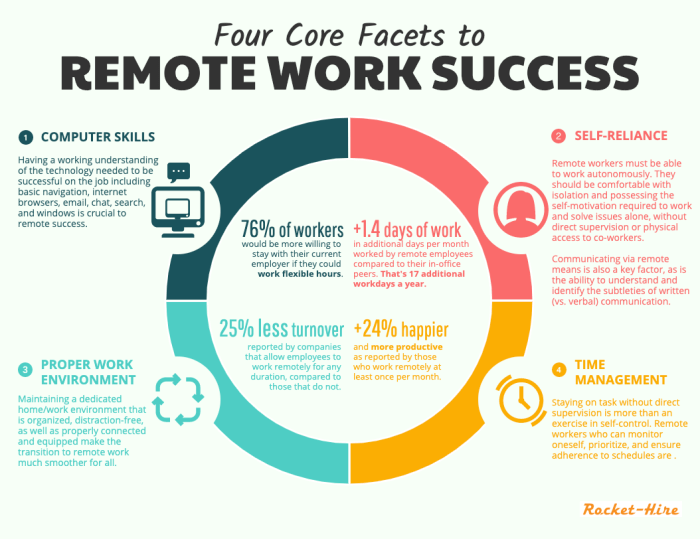
Effective remote work hinges on leveraging the right tools and technologies. The appropriate selection and implementation of these resources can dramatically improve communication, collaboration, and overall team efficiency, leading to increased productivity and project success. This section will explore key tools and technologies that contribute significantly to a productive remote work environment.
Communication Tools for Enhanced Remote Team Collaboration
Effective communication is paramount for successful remote teamwork. Choosing the right tools ensures seamless information exchange and fosters a sense of connection amongst geographically dispersed team members. The following tools significantly improve remote team collaboration:
- Slack: A widely-used platform offering instant messaging, file sharing, and channels for organized communication around specific projects or topics. Its versatility allows for both quick, informal exchanges and structured project discussions.
- Microsoft Teams: Integrated with the Microsoft 365 suite, Teams provides a comprehensive communication and collaboration hub, including chat, video conferencing, file sharing, and task management features. Its integration simplifies workflows for organizations already using Microsoft products.
- Zoom: A popular video conferencing tool enabling real-time face-to-face interaction. Its ease of use and robust features, such as screen sharing and breakout rooms, make it ideal for meetings, presentations, and informal team catch-ups.
- Google Meet: Integrated with Google Workspace, Meet offers a seamless video conferencing experience for teams using Google’s suite of applications. Its simplicity and integration with other Google tools streamline communication and collaboration.
Project Management Software Workflow for Enhanced Remote Team Productivity
Implementing a structured workflow using project management software is crucial for maintaining organization and tracking progress within a remote team. This example utilizes Asana to illustrate a potential workflow.Asana’s project management features allow for the creation of projects, assigning tasks to individual team members, setting deadlines, and tracking progress visually through Kanban boards or list views. A typical workflow might involve:
- Project Initiation: The project manager creates a new project in Asana, outlining the project goals, deliverables, and timeline. All relevant team members are added to the project.
- Task Assignment and Breakdown: The project is broken down into smaller, manageable tasks. Each task is assigned to a specific team member with clear instructions and deadlines.
- Progress Tracking: Team members update the status of their assigned tasks regularly, allowing the project manager to monitor progress and identify potential roadblocks.
- Communication and Collaboration: Asana allows for comments and discussions directly on tasks, facilitating communication and collaboration between team members.
- Reporting and Review: Asana provides various reporting tools to track project progress, identify bottlenecks, and measure overall team performance. Regular project reviews can be scheduled to ensure alignment and address any issues.
The Role of Cloud-Based Applications in Boosting Remote Worker Efficiency
Cloud-based applications provide remote workers with access to essential tools and data from anywhere with an internet connection. This accessibility eliminates the need for local storage and allows for seamless collaboration. Examples include cloud-based storage services (like Dropbox, Google Drive, or OneDrive) enabling shared file access and real-time collaboration on documents. Cloud-based project management tools, as discussed above, also contribute significantly to boosting remote worker efficiency by centralizing project information and streamlining communication.
Furthermore, cloud-based communication platforms, such as those listed previously, provide instant access to team members and facilitate rapid information exchange. The inherent accessibility and collaborative features of cloud applications contribute significantly to improved efficiency for remote workers.
Challenges and Solutions in Remote Work
Successfully navigating the remote work landscape requires understanding and addressing its inherent challenges. While remote work offers flexibility and autonomy, several obstacles can hinder productivity and employee well-being. Effectively mitigating these challenges is crucial for building a thriving and successful remote workforce.
Effective remote work necessitates a proactive approach to problem-solving. Addressing common challenges early on prevents them from escalating and negatively impacting team performance and individual morale.
Common Remote Work Challenges and Solutions
Several key challenges frequently arise in remote work environments. Addressing these proactively leads to improved productivity and employee satisfaction.
- Challenge: Communication Breakdown: Misunderstandings and delays in communication are common due to the lack of face-to-face interaction.
Solution: Implement multiple communication channels (instant messaging, video conferencing, project management software) to suit different needs. Encourage regular check-ins and virtual team meetings. Establish clear communication protocols and expectations. Utilize asynchronous communication tools for tasks that don’t require immediate responses.
- Challenge: Isolation and Loneliness: Working remotely can lead to feelings of isolation and disconnect from colleagues, impacting morale and collaboration.
Solution: Schedule regular virtual social events, such as team lunches or coffee breaks. Encourage informal online communication through dedicated channels. Promote opportunities for collaboration on projects to foster a sense of shared purpose. Facilitate opportunities for in-person meetings or team-building activities when feasible.
- Challenge: Maintaining Work-Life Balance: The blurring of boundaries between work and personal life can lead to burnout and reduced productivity.
Solution: Establish clear working hours and stick to them as much as possible. Encourage employees to take regular breaks and utilize vacation time. Provide resources and training on stress management and work-life balance techniques. Promote a culture that respects employees’ time outside of work.
Managing Remote Teams: Communication, Collaboration, and Performance Monitoring
Successfully managing remote teams requires a strategic approach to communication, collaboration, and performance monitoring. Establishing clear expectations and utilizing appropriate tools are key to ensuring productivity and team cohesion.
Effective communication is paramount. Utilizing project management software, regular video conferencing, and instant messaging platforms facilitates seamless information flow. Establishing clear communication protocols, such as response times and preferred methods of contact, minimizes confusion and delays. Regular check-ins and team meetings provide opportunities for updates, problem-solving, and relationship building.
Collaboration tools, such as shared online documents, collaborative whiteboards, and version control systems, are essential for seamless teamwork. These tools allow team members to work together on projects simultaneously, regardless of their physical location. Furthermore, fostering a culture of open communication and feedback encourages active participation and knowledge sharing.
Performance monitoring in remote teams requires a shift from traditional methods. Focusing on outcomes and deliverables rather than hours worked is crucial. Regular performance reviews, utilizing objective metrics and feedback, provide opportunities for recognition, improvement, and course correction. Transparent goal setting and progress tracking keep team members informed and engaged.
Fostering Community and Teamwork in Remote Teams
Building a strong sense of community and teamwork among geographically dispersed employees is crucial for success. Strategies for achieving this include cultivating a strong team culture, promoting social interaction, and emphasizing shared goals.
Creating a strong team culture starts with establishing clear values and expectations. Open communication, mutual respect, and trust are foundational elements. Regular team-building activities, both virtual and in-person, foster camaraderie and strengthen relationships. Celebrating successes and recognizing individual contributions reinforces a sense of shared accomplishment.
Encouraging informal communication through dedicated channels, such as team chat groups or social media platforms, promotes social interaction and connection. Organizing virtual social events, such as team lunches or online games, provides opportunities for informal interaction and relationship building. Furthermore, creating opportunities for cross-functional collaboration fosters a sense of shared purpose and interdependence.
Finally, emphasizing shared goals and objectives unites the team around a common purpose. Regularly communicating progress towards shared goals reinforces a sense of collective achievement. Clearly defining individual roles and responsibilities ensures that everyone understands their contribution to the overall success of the team.
Employment and Work in the Remote Era
The rise of remote work has fundamentally altered the traditional employment landscape, impacting everything from recruitment strategies to workplace culture and legal frameworks. This shift presents both opportunities and challenges for employers and employees alike, necessitating a careful consideration of its implications across various aspects of the employment relationship.The increased prevalence of remote work has led to a geographically dispersed workforce, allowing companies to tap into a wider talent pool beyond geographical limitations.
This has also resulted in a greater emphasis on skills-based hiring rather than location-based criteria. Furthermore, the need for robust communication and collaboration tools has become paramount, driving innovation in technology and reshaping the way teams interact and manage projects.
Legal and Ethical Considerations of Remote Work
The expansion of remote work has brought forth a complex array of legal and ethical considerations. Data privacy, for example, is a critical concern, requiring employers to implement stringent security measures to protect sensitive employee and company information. This includes adhering to regulations such as GDPR (General Data Protection Regulation) and CCPA (California Consumer Privacy Act) and ensuring employees understand their responsibilities in maintaining data confidentiality.
Another significant aspect is ensuring compliance with labor laws across different jurisdictions, especially when employing a geographically dispersed workforce. This necessitates a thorough understanding of employment regulations in each location where employees reside to ensure compliance with local laws regarding working hours, minimum wage, and other employment standards. Finally, clear and transparent policies regarding employee monitoring and expectations of availability must be established to maintain a balance between employer needs and employee rights to privacy and autonomy.
Impact of Remote Work on Employee Compensation and Benefits
The impact of remote work on employee compensation and benefits is multifaceted. While some companies have adopted a location-agnostic compensation strategy, paying employees based on skills and experience regardless of location, others have adjusted salaries based on cost of living in the employee’s region. This has created a dynamic shift in how compensation is determined, prompting discussions on fairness and equity.
In terms of benefits, the provision of remote work-specific benefits, such as stipends for home office equipment or internet access, has become increasingly common. However, the provision of health insurance and other traditional benefits may require adjustments to accommodate employees working across various jurisdictions. Moreover, the blurring of lines between work and personal life in a remote setting has raised concerns about work-life balance and potential for burnout, leading some employers to offer enhanced mental health support and flexible working arrangements.
The Future of Remote Work Productivity
The future of remote work productivity is poised for significant transformation, driven by rapid technological advancements and evolving work styles. We’re moving beyond simply adapting existing practices to a new environment; instead, we’re witnessing the emergence of entirely new ways of working, collaborating, and achieving results. This evolution will be shaped by both exciting opportunities and considerable challenges.The increasing sophistication of technology will play a pivotal role in shaping the future landscape.
Improved communication tools, advanced project management software, and the integration of AI will redefine how remote teams operate and collaborate. Furthermore, the blurring lines between work and personal life will necessitate a more holistic approach to productivity, focusing on employee well-being and sustainable work practices.
Technological Advancements and Evolving Work Styles
Technological advancements will continue to drive remote work productivity. We can expect to see more sophisticated collaboration platforms that seamlessly integrate communication, project management, and file sharing. Virtual reality (VR) and augmented reality (AR) technologies will likely become more commonplace, enabling richer, more immersive collaborative experiences, potentially bridging the physical distance gap between team members. For example, imagine architects collaboratively designing a building in a shared virtual space, manipulating 3D models in real-time, regardless of their geographical location.
This represents a significant leap from current video conferencing limitations. Furthermore, the rise of asynchronous communication tools will allow for more flexible work schedules and improved work-life balance, catering to diverse individual preferences and time zones.
Future Challenges and Opportunities
The future of remote work will present both opportunities and challenges. One significant challenge will be maintaining a strong sense of team cohesion and company culture in a geographically dispersed workforce. Companies will need to invest in innovative strategies to foster a sense of community and belonging among remote employees. Opportunities, however, lie in the potential for increased access to a global talent pool, leading to greater diversity and innovation.
Companies will be able to recruit the best talent regardless of location, fostering a more competitive and dynamic workforce. Another significant opportunity lies in the potential for reduced operational costs, as companies can downsize their physical office spaces and reduce associated expenses. This cost-saving potential could be reinvested in employee development and technological improvements, further boosting productivity.
The Impact of AI and Automation on Remote Work Productivity
Artificial intelligence (AI) and automation will significantly impact remote work productivity. AI-powered tools can automate repetitive tasks, freeing up employees to focus on more strategic and creative work. For instance, AI-powered chatbots can handle routine customer inquiries, freeing up human agents to address more complex issues. This not only increases efficiency but also enhances the overall employee experience.
Furthermore, AI can provide valuable insights into employee performance and productivity, enabling managers to identify areas for improvement and provide targeted support. However, it is crucial to address the ethical implications of AI in the workplace, ensuring fairness and transparency in its implementation to avoid bias and job displacement. The successful integration of AI will require careful planning, training, and a focus on human-centered design to maximize its benefits while mitigating potential risks.
Ultimately, maximizing remote work productivity requires a holistic approach that encompasses robust technology, supportive company culture, and a focus on employee well-being. By understanding the key factors influencing success, implementing effective strategies, and adapting to the evolving landscape of remote work, organizations can unlock the full potential of their distributed teams and achieve sustainable growth in this increasingly prevalent work model.
The future of work is remote, and understanding its nuances is key to thriving in this new paradigm.
Expert Answers
What are some common distractions for remote workers, and how can they be minimized?
Common distractions include household chores, family members, social media, and news notifications. Minimizing these requires dedicated workspace, clear boundaries with family, utilizing website blockers, and turning off non-essential notifications.
How can companies ensure fair compensation for remote workers across different geographical locations?
Companies can use salary benchmarking tools to ensure competitive pay based on location and cost of living. Transparent compensation policies and regular performance reviews are also crucial.
How can managers effectively monitor the performance of remote employees without micromanaging?
Focus on outcomes rather than hours worked. Utilize project management tools to track progress, schedule regular check-ins, and provide constructive feedback based on established KPIs.